All private water supply guides
Substantial, England-focused articles. Primary DWI sources are linked inside regulatory and water-safety content.
Activated Carbon Filters on Private Water Supplies: Uses and Limitations
Activated carbon can reduce some tastes, odours and organic compounds in private water supplies. Learn where it fits, what it does not do and how to manage media changes.
Read guide →
Borehole Private Water Supply Maintenance: Pump, Headworks and Water Quality Records
Borehole private water supply maintenance guide covering headworks, pumps, source protection, treatment, changes in yield and water-quality evidence.
Read guide →
Chlorination of Private Water Supplies: Operation, Contact Time and Records
Chlorination for private water supplies explained: residual disinfection, contact time, pre-treatment, dosing records and why competent operation matters.
Read guide →
E. coli in a Private Water Supply: What the Result Means Operationally
E. coli in a private water supply is a serious microbiological finding. Understand the source-to-tap investigation, treatment checks and records to keep while following authority advice.
Read guide →
Group A vs Group B Private Water Supply Monitoring
Group A and Group B monitoring explained for Regulation 9 private water supplies in England, including core parameters, additional parameters and frequency principles.
Read guide →
How Often Should a Private Water Supply Be Tested?
How often private water supplies are tested depends on regulation type, volume and risk assessment. Understand Regulation 8, 9 and 10 monitoring in England.
Read guide →
Iron and Manganese in Borehole Water: Causes, Treatment and Maintenance
Iron and manganese in borehole and private water supplies can cause colour, deposits and treatment problems. Understand oxidation, filtration and maintenance records.
Read guide →
Nitrate in a Private Water Supply: Risks, Sources, Testing and Treatment
Nitrate in private water supplies can come from fertilisers, animal waste or sewage influence. Understand the 50 mg/L standard, investigation, treatment and operational records.
Read guide →
Pre-Filtration for Private Water Supplies: Cartridge, Media and UV Protection
How pre-filtration supports private water treatment by reducing sediment and turbidity before UV or specialist treatment, plus maintenance records to keep.
Read guide →
Private Water Supply Storage Tank Maintenance and Inspection
Private water supply tank maintenance: lids, vents, overflows, ingress, cleaning, inspection, post-treatment storage and evidence records.
Read guide →
Private Water Supply for Airbnb and Short-Term Lets: What Hosts Need to Know
Private water supply guidance for Airbnb and short-term-let hosts in England: Regulation 9, sampling, risk assessment, guest safety records and treatment maintenance.
Read guide →
Private Water Supply for B&Bs and Guest Houses
Private water supply guidance for B&Bs and guest houses in England: Regulation 9, guest use, sampling, treatment maintenance and evidence for inspections.
Read guide →
Private Water Supplies for Campsites and Caravan Sites
How campsite and caravan-site operators can organise private water supply records and due dates.
Read guide →
Private Water Supply for Caravan Parks: Monitoring, Distribution and Seasonal Operation
Private water supply guidance for caravan parks and holiday parks in England, including Regulation 9, seasonal reopening, distribution networks, sampling and maintenance records.
Read guide →
Private Water Supply Change Log: Why Alterations Need Records
How to document changes to treatment, storage, source or distribution so the supply history remains understandable.
Read guide →
Private Water Supply Corrective Action Log
A practical corrective-action workflow for risk-assessment findings, sample follow-up and maintenance issues.
Read guide →
Private Water Supply Council Fees: How to Budget
How to create a sensible budget for local-authority, laboratory, maintenance and treatment costs without guessing council charges.
Read guide →
Private Water Supply Emergency Plan: A Practical Framework
Build an operator emergency plan that preserves contacts, actions and evidence without replacing professional instructions.
Read guide →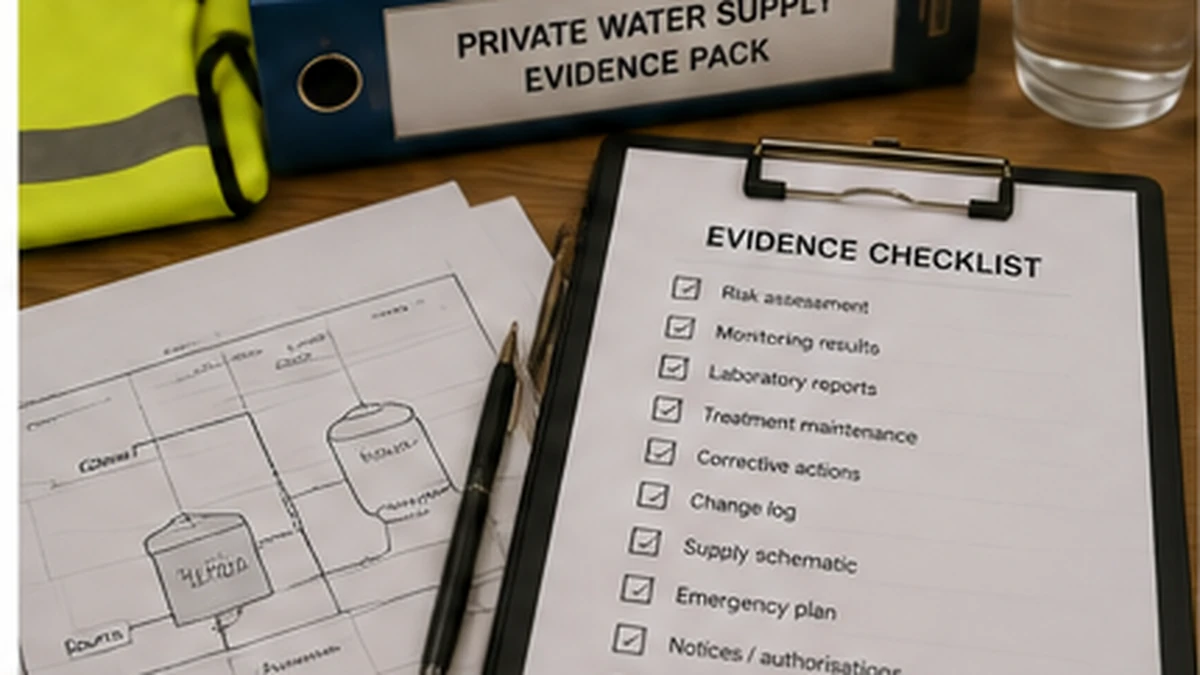
Private Water Supply Evidence Pack: What to Include
A practical structure for producing an organised private water supply evidence pack.
Read guide →
Private Water Supplies on Farms: Operational Records
A private water supply record framework for farms and mixed rural businesses.
Read guide →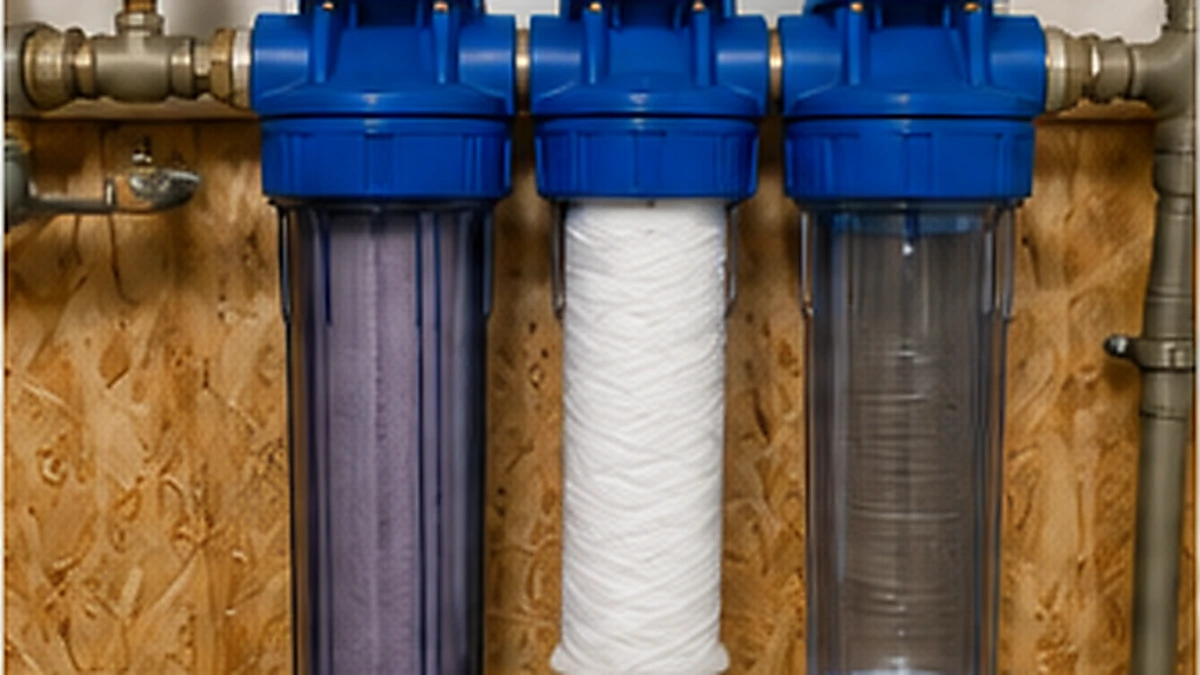
Filter Maintenance Records for Private Water Supplies
How to document filter changes and other routine treatment maintenance on a private water supply.
Read guide →
Private Water Supplies for Holiday Lets and Guest Accommodation
Operational record keeping for holiday lets, guest houses and other visitor accommodation using a private water supply.
Read guide →
How to Organise Private Water Supply Laboratory Results
A safer way to store and track water test reports without turning a software dashboard into a laboratory interpretation tool.
Read guide →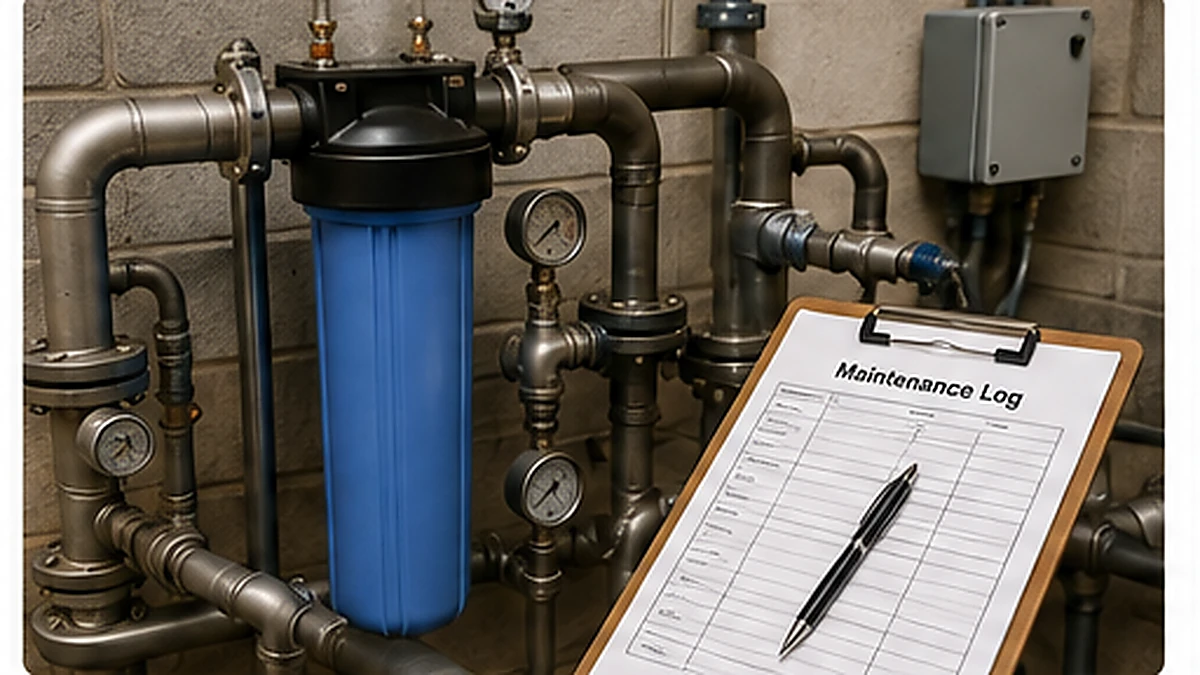
Private Water Supply Maintenance Log
How to build a useful maintenance log for pumps, filtration, UV, tanks and treatment equipment.
Read guide →
Private Water Supply Notices: How to Keep an Action Record
How to organise a local-authority notice and the operational work that follows.
Read guide →
Buying a Property With a Private Water Supply: Complete Buyer’s Guide
Buying a house or rural property with a private water supply? Check source ownership, water testing, treatment, shared responsibilities, records, costs and council history before completion.
Read guide →
Private Water Supply Record Keeping: A Practical Checklist
A practical record-keeping checklist for source-to-tap information, treatment maintenance, samples and corrective actions.
Read guide →
Private Water Supply Regulations in England: The Complete 2026 Guide
A practical guide to private water supply regulations in England, including Regulations 8, 9 and 10, risk assessments, monitoring, fees, records and operator responsibilities.
Read guide →
Private Water Supply for Restaurants and Cafés: Water Quality and Operational Records
Private water supply guidance for restaurants and cafés in England: Regulation 9, food use, drinking water, treatment, sampling and incident records.
Read guide →
Private Water Supply Risk Assessment: Regulation 6 Guide for England
Understand Regulation 6 risk assessment in England: local-authority duties, source-to-tap hazards, five-year reviews, significant changes, evidence and action plans.
Read guide →
Private Water Supply Sampling Records: What to Keep
How to organise private water supply sampling programmes, laboratory files and follow-up evidence.
Read guide →
How to Create a Useful Private Water Supply Schematic
What a useful private water supply schematic should show from source to tap, how it supports risk assessment and how to keep it current after changes.
Read guide →
Private Water Supply Test Failed: What Happens Next?
What to do when a private water supply sample fails or raises concern: preserve the report, follow authority advice, investigate the source-to-tap system and document corrective actions.
Read guide →
Private Water Supply Testing and Sampling: Complete Guide for England
Understand private water supply testing in England: Regulation 8, 9 and 10 monitoring, Group A and B sampling, sample records, laboratory reports and follow-up actions.
Read guide →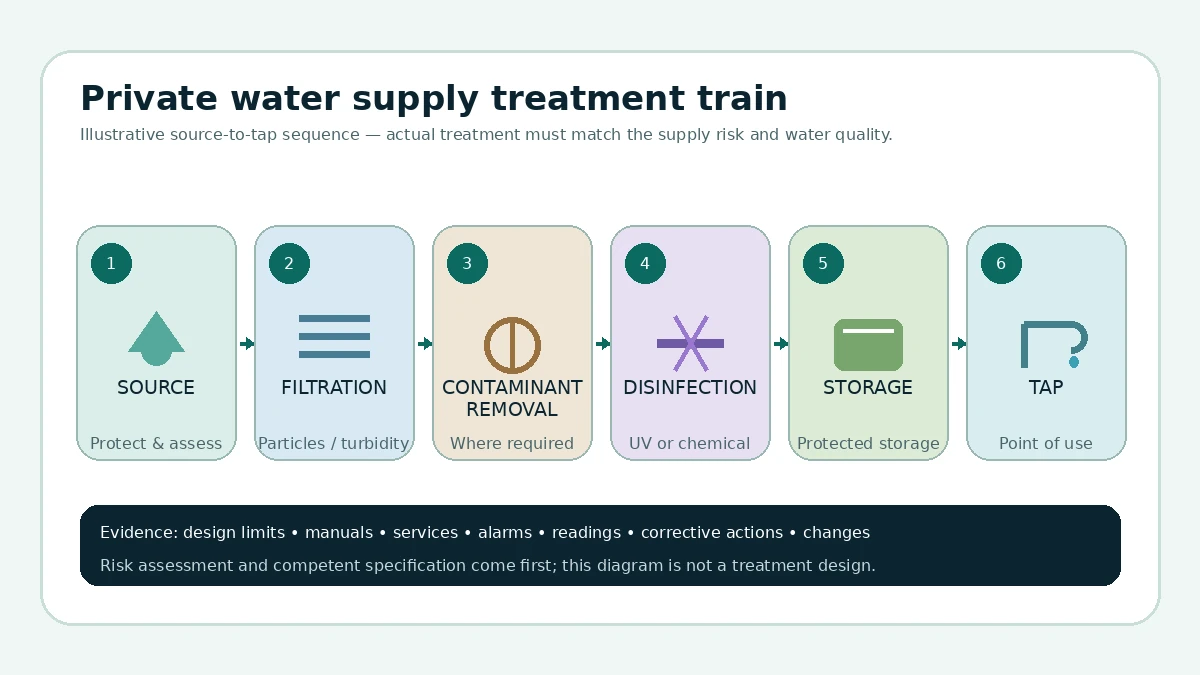
Private Water Supply Treatment Systems: Complete Guide to Filtration, UV and More
A practical guide to private water supply treatment systems including source protection, pre-filtration, UV, chlorination, iron and manganese removal, nitrate treatment and maintenance.
Read guide →
How to Read a Private Water Supply Laboratory Report
A practical guide to reading private water supply laboratory reports: sample details, units, limits, flags, microbiology, chemistry, trends and follow-up records.
Read guide →
Regulation 10 Private Water Supplies
A practical guide to smaller non-commercial shared supplies and single dwellings under Regulation 10 in England.
Read guide →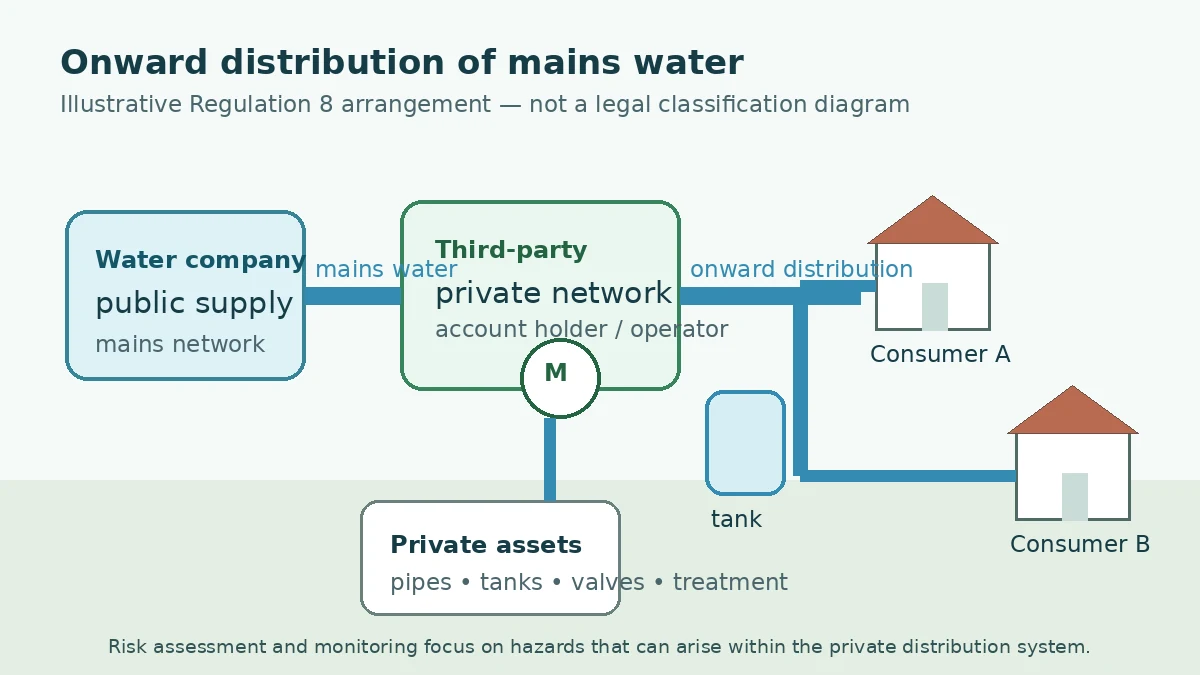
Regulation 8 Private Distribution Systems
Understand onward distribution of mains water and why Regulation 8 classification can require local-authority judgement.
Read guide →
Regulation 9 Private Water Supplies: A Practical Operator Guide
What Regulation 9 means for commercial and public private water supplies in England, including risk assessment, monitoring and operational record keeping.
Read guide →
Selling a House With a Private Water Supply: Records Buyers Will Ask For
Prepare to sell a house with a private water supply by organising test results, source rights, treatment records, shared agreements, council correspondence and running costs.
Read guide →
Shared Private Water Supply Responsibilities: Who Maintains, Tests and Pays?
How to organise responsibilities on a shared private water supply: source access, treatment, sampling, electricity, repairs, records, contacts and cost sharing.
Read guide →
Turbidity in a Private Water Supply: Causes, Treatment and Records
Turbidity in private water can affect appearance and treatment performance. Learn common causes, rainfall patterns, filtration, UV implications and useful maintenance records.
Read guide →
UV Lamp Replacement for Private Water Supplies: When and What to Record
Plan UV lamp replacement using the manufacturer interval, record sleeve cleaning and alarms, and understand why a glowing lamp does not prove adequate disinfection.
Read guide →
Private Water Supply UV System Problems: A Practical Troubleshooting Record Guide
Common UV system problems on private water supplies: alarms, lamp age, sleeve fouling, high flow, turbidity, power failure and the records to keep before calling a professional.
Read guide →
UV Treatment on a Private Water Supply: Records to Keep
Operational records for ultraviolet treatment on a private water supply, without substituting for manufacturer or professional advice.
Read guide →
What Does a Private Water Supply Test Include?
What a private water supply test can include: microbiological, physical and chemical parameters, Group A and B monitoring and risk-based additions.
Read guide →