- Which accommodation is covered?
- Regulation 9 classification
- Shared supplies and multiple properties
- Regulation 6 risk assessment
- Group A and Group B monitoring
- Choosing representative sampling points
- Accommodation-specific operational risks
- Seasonal closure and reopening
- Treatment: risk-based, not one-size-fits-all
- When things go wrong
- Useful operational records
- How this guide differs from Airbnb and B&B guides
- Using the member workspace
- England and the other UK nations
- Frequently asked questions
1. Which accommodation is covered?
The important question is not whether a property is rural, small or only occupied for part of the year. It is whether private water is being supplied for human consumption as part of a commercial or public activity. DWI's Regulation 9 guidance specifically lists holiday let accommodation among commercial uses.
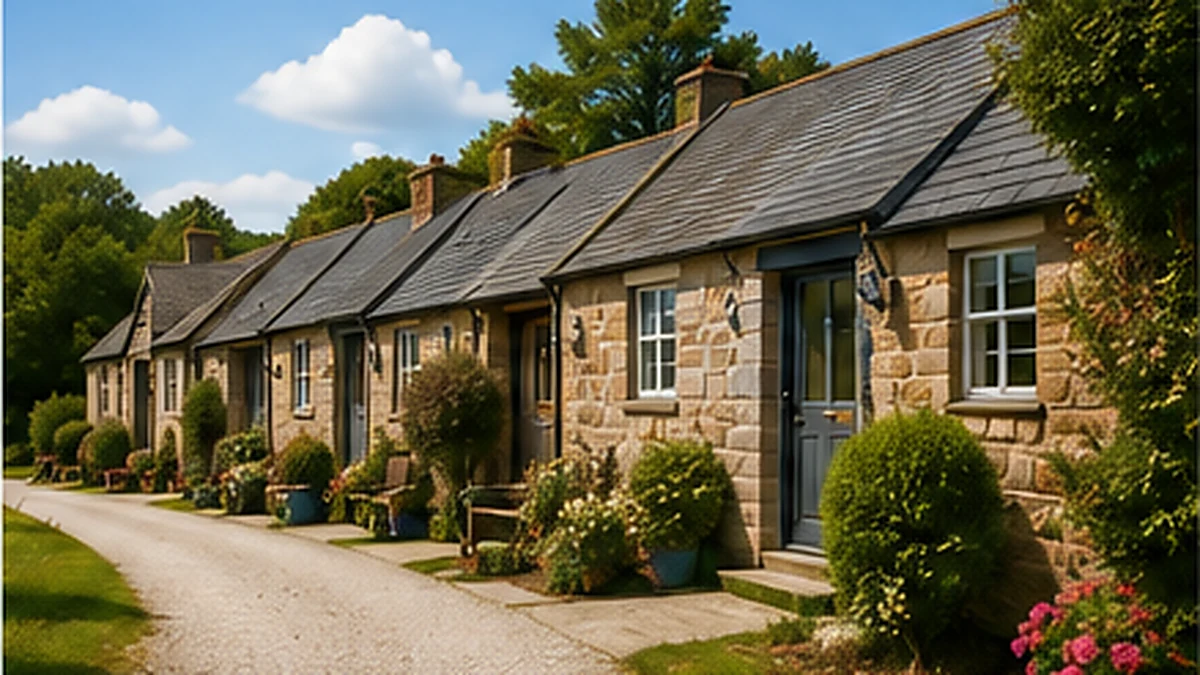
For this guide, the core search intent is wider self-catering and guest accommodation: holiday cottages, holiday lodges, self-catering units, glamping accommodation with drinking-water facilities, guest annexes offered for payment and farm holiday lets. Airbnb and other short-term-let listings can fall into the same legal classification, but the separate Airbnb and short-term-let guide is written around the host/platform workflow. The B&B and guest-house guide focuses on resident-host and breakfast/guest-house operations.
| Accommodation/use | Operational point |
|---|---|
| Holiday cottage / self-catering unit | Private water used by paying guests is commercial activity and falls within Regulation 9. |
| Glamping unit or lodge | If private water is provided for domestic/human-consumption use as part of the paid stay, treat it as commercial activity. |
| Guest annex offered for payment | The commercial use matters even where the annex forms part of a larger owner-occupied property. |
| Purely private domestic dwelling | A dwelling used only by the owner/household, with no commercial/public use, is not made Regulation 9 merely because it is on the same type of private source. |
2. Regulation 9 classification
Regulation 9 applies where a private supply provides an average of 10 m³/day or more for domestic purposes or where the water is used as part of a commercial or public activity. Holiday-let use falls into the second route, so there is no “too small to count” exception for a one-cottage business using private water for its guests.
This is different from a genuinely private single dwelling or small shared domestic supply with no commercial/public use, which may fall under Regulation 10. If water-company mains water is being onward distributed by a third party, Regulation 8 may instead be relevant. Classification should be confirmed with the local authority because the source, distribution arrangement and uses all matter.
3. Shared supplies and multiple properties
Holiday sites often share one spring, borehole, treatment room or storage tank across an owner's house plus several cottages. DWI's Regulation 7 guidance is particularly important here: if water in one or more buildings on the supply is used as part of a commercial or public activity, the entire supply must be monitored in accordance with Regulation 9.
That means an owner's private dwelling on the same hydraulic supply cannot simply be treated as a separate low-risk monitoring category while the guest cottages use the same source and treatment. Keep a current source-to-tap schematic showing each unit, treatment point, storage tank and distribution branch so the local authority can understand what is actually connected.
4. Regulation 6 risk assessment
The statutory Regulation 6 risk assessment is the local authority's duty, not a self-certification exercise for the accommodation operator. In England it must be carried out at least every five years, with review sooner where the current assessment becomes inadequate or circumstances change significantly.
Your role as the relevant person/operator is to make the supply understandable and manageable: provide accurate source, treatment, storage and distribution information; report significant changes; maintain the controls; and keep evidence available. Adding a new cottage, changing treatment, extending a long branch, installing new storage or materially changing occupancy can all be relevant to the risk picture and should be recorded in your change-management history.
5. Group A and Group B monitoring
Regulation 9 supplies are monitored using both Group A and Group B specifications, plus parameters identified as necessary by the risk assessment. DWI explains that frequency is driven by the volume supplied, with annual monitoring as the minimum frequency for Regulation 9 supplies and higher frequencies applying as volumes increase.
Do not create your own statutory programme from a generic online checklist. Keep the local authority programme, sampling dates and original laboratory reports together. The site's Sampling Schedule Tracker can help organise due dates, but it does not replace the authority's programme.
6. Choosing representative sampling points
Regulation 12 describes the sampling point as a tap normally used for human consumption, and where several points are possible the sample must be representative of the water supplied. DWI also says regulatory samples should not normally be taken from multiple buildings on every visit: a suitable point on the supply is chosen, unless the arrangement requires something different—for example, separate treatment devices at different buildings.
For multi-unit accommodation, useful information for the sampler includes shared versus individual treatment, long branches, storage, intermittently occupied units and any location that has produced a previous issue. Do not assume that “every guest tap must be sampled” or that always sampling the nearest cottage is representative.
7. Accommodation-specific operational risks
Holiday accommodation adds operating patterns that may not exist in a continuously occupied house. Risk depends on the actual system, but common points worth managing include:
- Vacancy and low turnover: intermittent occupancy can leave water standing in long branches, storage or little-used outlets.
- Peak demand: school holidays or group changeovers can create much higher flow than quiet periods, which matters where treatment has a maximum design flow.
- Multiple units: shared tanks and long distribution runs make clear asset labels and schematic branches important.
- Treatment alarms: housekeeping staff need a simple escalation route rather than attempting to diagnose or reset safety-critical equipment without instruction.
- New accommodation: connecting another lodge, annex or cottage changes the system and may change demand, sampling strategy or risk.
- Guest reports: unusual colour, odour, taste, pressure or visible treatment alarms should be recorded and escalated rather than dismissed as a one-off complaint.
8. Seasonal closure and reopening
There is no universal statutory “holiday-let reopening checklist” that applies after every quiet season. Use the actual system design, risk assessment, manufacturer instructions and local-authority advice. Avoid inventing arbitrary flushing times or a standard resampling rule for every site.
Regulation 13 has a specific threshold: it covers a reinstated existing supply after 12 months of non-use, as well as a new private supply and a previously abandoned/disused source brought back into domestic use. DWI says such a supply should not be put into (re)use until the local authority has completed the Regulation 6 risk assessment and determined the applicable monitoring. A normal seasonal closure shorter than 12 months does not automatically become a Regulation 13 reinstatement.
9. Treatment: risk-based, not one-size-fits-all
Holiday-let status does not itself dictate a treatment train. DWI's treatment guidance says treatment choice depends on the raw-water properties and the contaminants/risk that need to be controlled. UV, filtration, activated carbon, iron/manganese treatment and chlorination perform different jobs.
Where UV is used, equipment capacity, water clarity, flow rate, lamp/sleeve condition and upstream treatment can all matter. A glowing UV lamp is not proof of adequate disinfection. Keep the actual equipment instructions and use the treatment systems guide for the broader treatment context.
10. When things go wrong
A failed sample, treatment alarm, suspected source contamination, loss of pressure or insufficiency should be managed according to the nature of the problem. Do not publish a universal boil-water or do-not-drink instruction for every incident. Under Regulation 15, if the local authority considers a supply a potential danger to human health it must promptly ensure people likely to consume the water are informed and given appropriate advice; Regulation 18 provides the notice mechanism where a supply poses a potential danger to health.
Operators should be ready to identify affected units, stop relying on unsafe assumptions, cooperate with the local authority, preserve laboratory/treatment evidence and communicate the authority's or public-health professional's advice clearly to guests. Alternative drinking water may be required in some incidents, but the response depends on the actual risk. Use the emergency-plan guide and corrective-action guide for the response and close-out workflow.
11. Useful operational records
There is no special statutory document called a “holiday-let water log”. Useful business evidence is nevertheless important because it shows how the supply has been operated between authority visits. Keep records that fit the real system:
- the current local-authority risk assessment and monitoring programme;
- original laboratory reports and the sampling location/date;
- source, treatment, storage and distribution schematic;
- treatment servicing, UV/filter maintenance and alarms;
- maintenance tasks and completed repairs;
- corrective actions and follow-up evidence;
- changes in properties served, occupancy pattern or system layout;
- incident/guest communications where water safety was involved;
- emergency contacts and alternative-supply arrangements;
- relevant contractor, council and laboratory correspondence.
The evidence-pack guide explains how to assemble these records without pretending every invoice or photo is a statutory document.
12. How this guide differs from Airbnb and B&B guides
| Guide | Primary search intent | Best fit |
|---|---|---|
| Airbnb & short-term lets | Host-focused compliance for platform-listed/short-stay property | Individual hosts and short-term-let operators |
| B&Bs & guest houses | Guest-house/B&B operation, guest rooms and breakfast-service context | Resident hosts and traditional guest accommodation |
| This guide | Multi-unit/self-catering estate operation, shared supplies and seasonal accommodation | Holiday cottages, lodges, glamping sites, guest annexes and mixed self-catering portfolios |
This distinction matters for users and search engines: the legal classification can be the same, but the operational questions differ. This page therefore concentrates on multi-unit distribution, seasonal operation, shared systems and consistent records across accommodation units rather than repeating host-platform or B&B-specific advice.
13. Using the member workspace
Private Water Supply Manager does not have a fictional “holiday-let mode”. The same supply workspace can be used to organise Monitoring, Maintenance, Corrective actions, Change log, Supply schematic, Emergency plan, Documents and Evidence packs for an accommodation supply. That is more useful than creating a separate duplicate record system just because the premises are holiday cottages.
Open member workspace Maintenance planner
14. England and the other UK nations
The Regulation 6/9/12/13/15/18 references on this page are for England. Wales has separate Private Water Supplies Regulations and Scotland and Northern Ireland operate separate private-supply regimes. Do not apply England's regulation numbering or monitoring tables unchanged elsewhere in the UK.
15. Frequently asked questions
Are holiday cottages with a private water supply Regulation 9 supplies?
Yes, when private water is provided as part of the holiday-let business. DWI lists holiday-let accommodation as commercial activity under Regulation 9, so the commercial-use rule applies irrespective of the normal 10 m³/day volume threshold.
Does the whole shared supply become Regulation 9 if only one cottage is let commercially?
For monitoring purposes, DWI says that if water in one or more buildings on a shared private supply is used as part of a commercial or public activity, the entire supply must be monitored in accordance with Regulation 9. The local authority should confirm the classification and monitoring programme for the actual supply.
Does every guest tap have to be sampled?
No. Regulation 12 requires a representative point used for human consumption, and DWI says regulatory samples should not normally be collected from multiple buildings on every visit. The authority chooses a suitable representative point, with different arrangements where there is no single treatment point or separate treatment devices are used.
How often is a Regulation 9 holiday-let supply sampled?
Regulation 9 supplies use Group A and Group B monitoring, with frequency determined by the volume supplied and the Regulations, plus any additional parameters identified by the risk assessment. DWI describes annual monitoring as the minimum frequency for Regulation 9 supplies.
Do seasonal holiday lets need a special reopening test every year?
There is no universal annual reopening procedure in the Regulations. Regulation 13 specifically applies to a reinstated supply after 12 months of non-use, as well as new supplies and previously abandoned sources. Shorter seasonal closures should be managed according to the supply-specific risks, treatment instructions and local-authority advice.
Does every holiday let need UV treatment?
No. Treatment must be selected for the actual source water, hazards, water quality and complete supply system. UV, filtration, chlorination and other processes have different purposes and maintenance needs.
What should an operator do if guests report unusual water quality?
Record the report, identify the affected property or outlet, check relevant treatment or operational information and contact the local authority or competent water professional where safety may be in question. Do not issue generic boil-water or do-not-drink instructions unless they are appropriate to the identified risk and professional or authority advice.
- DWI — Regulation 9 commercial and public supplies
- DWI — Regulation 6 risk assessment
- DWI — Group A and Group B monitoring
- DWI — Regulation 7 monitoring and shared-supply sampling
- DWI — Regulation 12 sampling points
- DWI — Regulation 13 new/reinstated supplies
- DWI — Regulation 15 provision of information
- DWI — Regulation 18 notices
- DWI — Treatment guide
- legislation.gov.uk — Private Water Supplies (England) Regulations 2016
This guide explains operational and record-keeping issues for England. The local authority is the regulator for the actual private supply and should confirm classification, risk assessment, monitoring and incident requirements.